Your Virtual EEG Department that backs up, not replaces, your team. SEE HOW It Works→
Moving to a 1:10 ratio and reviewing back to the last two hours every login provides the support your team needs for less critical patients.
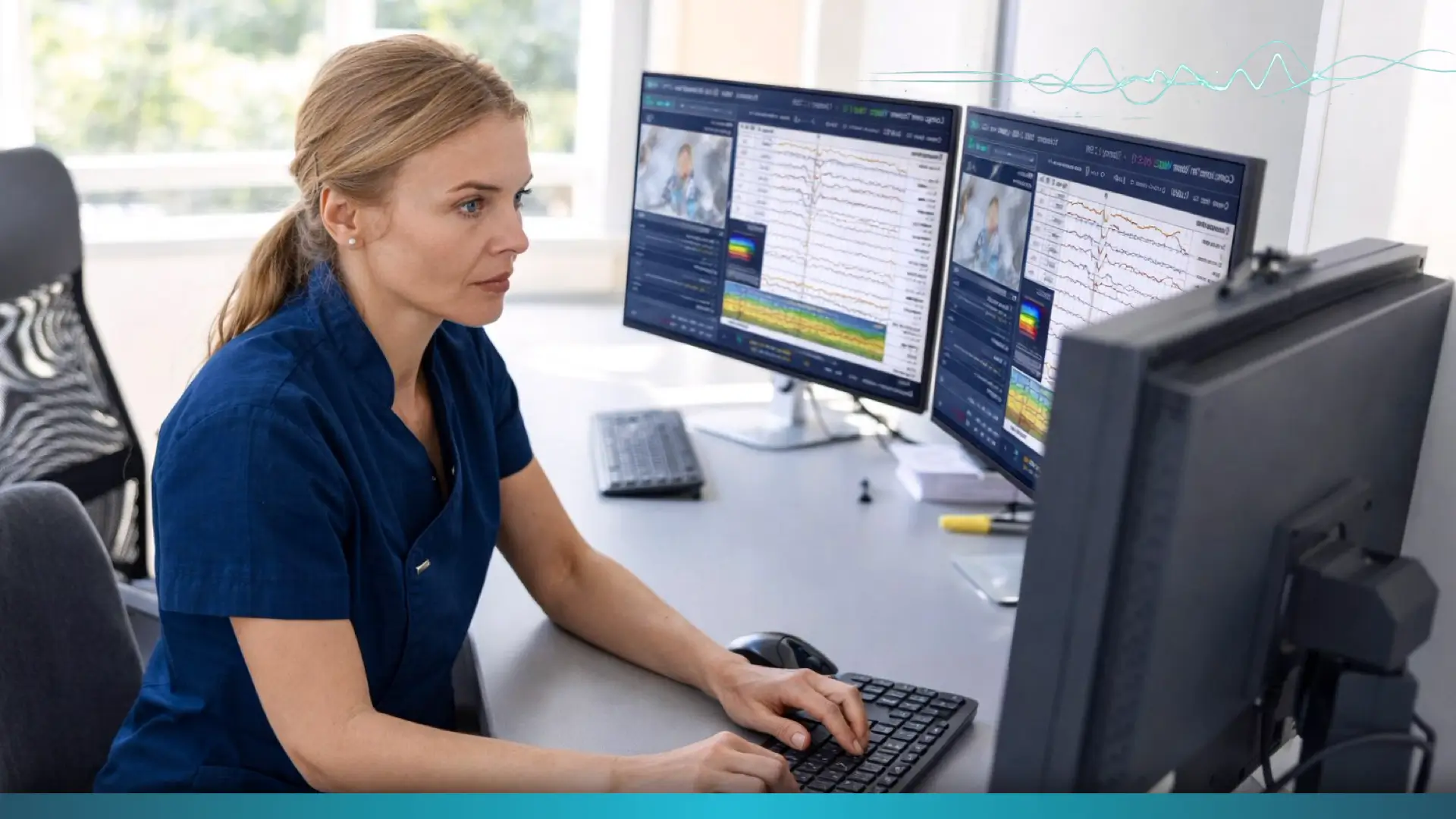

CEO, CortiCare
“We started CortiCare because too many hospitals were trying to do in-house critical EEG coverage without the support they deserved. Our job is to stand behind them.”
EEG monitoring is clinically essential—but operationally fragile.
Most hospitals depend on individual availability rather than defined standards, especially after hours. As volumes increase and staffing tightens, coverage becomes inconsistent, escalation becomes informal, and risk increases.
Common failure points include:
When monitoring lacks structure, patient risk increases, and staff burnout follows.

Many hospitals and practices do not need continuous ICU-level EEG surveillance for every patient.
When it’s appropriate:
Monitored intermittent EEG allows programs to align monitoring intensity to patient risk without overbuilding infrastructure.

Monitored intermittent EEG is not unsupervised review.
At CortiCare, it includes:
This is time-bounded, structured EEG monitoring delivered under clear standards.
It is appropriate when continuous surveillance is not clinically required.
Standardize defined coverage windows across multiple hospitals while stabilizing off-hours needs without deploying full continuous models everywhere.
Expand EEG access and cover nights or overflow without committing to full 24/7 continuous infrastructure.
Intermittent models support broader service lines and maintain predictable coverage outside peak ICU acuity.
Monitored intermittent EEG extends diagnostic access & manages time-bounded monitoring needs aligned with patient acuity.
Learn More About How We Support Neurology & Epilepsy Practices >
Utilize intermittent EEG when protocols require defined monitoring periods rather than continuous ICU-level surveillance.

Both services operate under the same Virtual EEG Department
framework — but they address different clinical needs.
Intermittent EEG is not a reduced standard. It is a structured model aligned to defined risk.
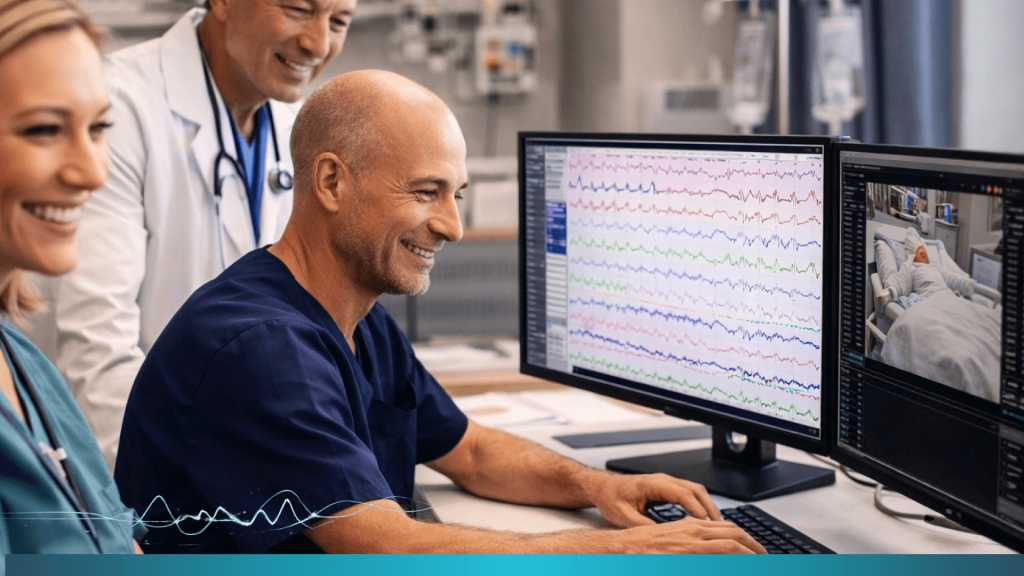
CortiCare implements intermittent monitoring deliberately and collaboratively.
Physicians retain clinical authority. Internal teams retain governance. CortiCare functions as an operational safety net — stabilizing defined windows of monitoring.
Intermittent monitoring strengthens programs without overextending them.
Hospitals describe CortiCare as a stabilizing extension of their EEG program, not a replacement vendor.
Your EEG program reflects commitment and expertise.
CortiCare helps make it more sustainable, more consistent, and more defensible across every shift and every site.

It is most commonly used in: