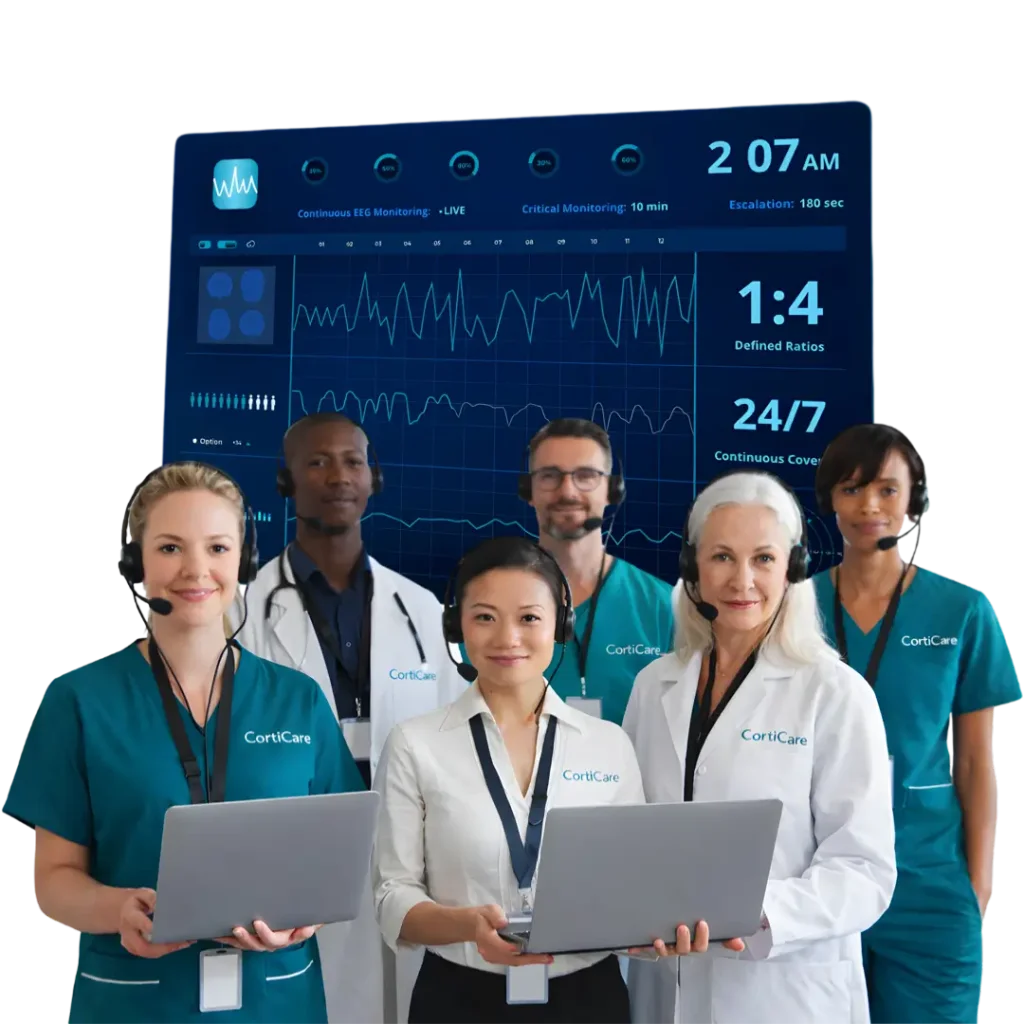
Your Virtual EEG Department that backs up, not replaces, your team. SEE HOW It Works→
Built to complement and protect your in-house EEG team with defined coverage and accountability.

Your in-house program remains the clinical anchor. We extend it so coverage becomes stable and provable, and works alongside your in-house team to:
What A Virtual EEG Department Is Not:
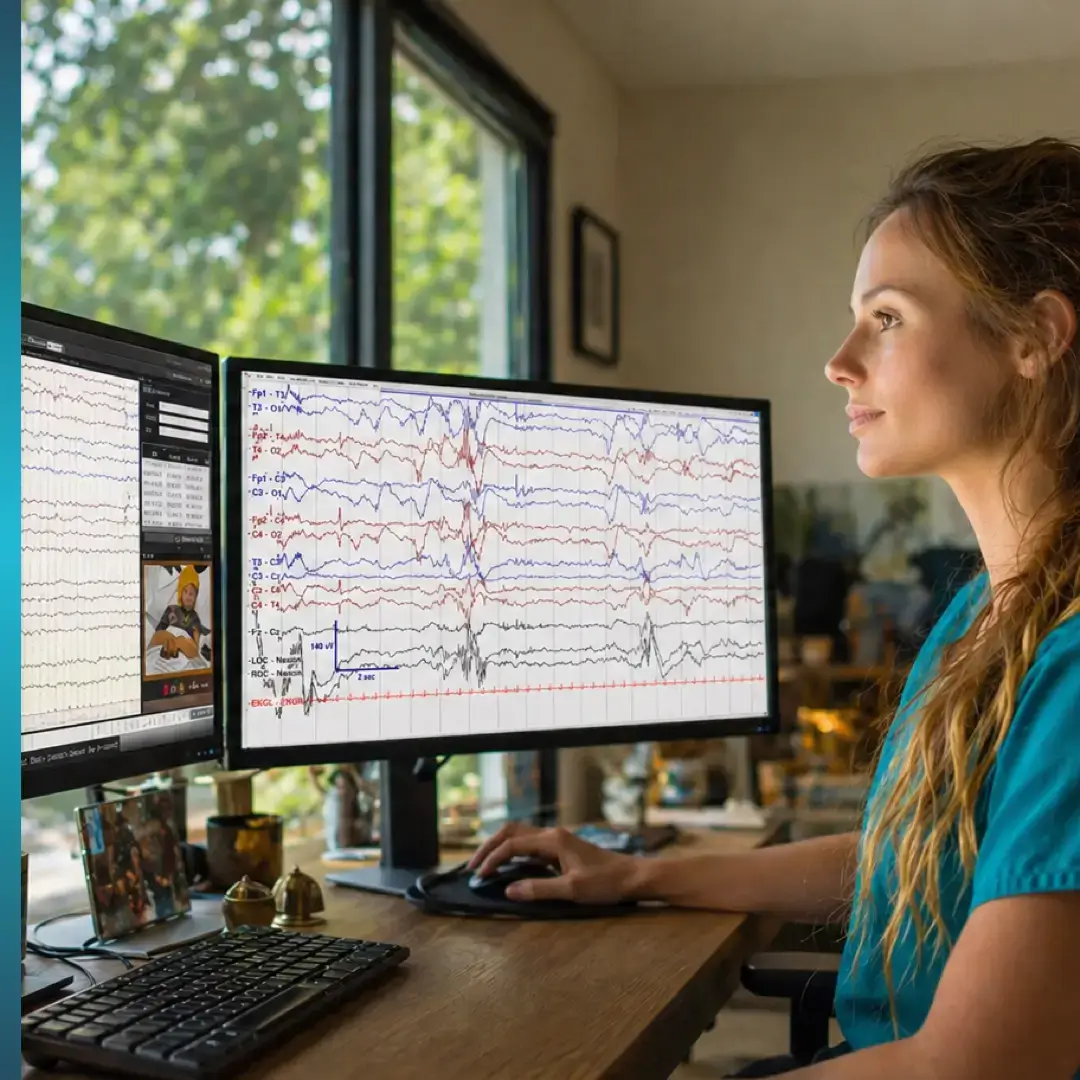

For Organizations With In-House EEG Teams
Your EEG department remains the clinical anchor. CortiCare does not replace internal expertise; it reinforces it.
The Virtual EEG Department:
Instead of expanding headcount to achieve theoretical 24/7 coverage, you gain:
Many hospitals use remote EEG vendors to fill gaps. Because CortiCare works with existing EEG systems and integrates directly into hospital workflows and EMRs, onboarding is structured and efficient.
In many cases, we can stand up defined coverage quickly—replacing undefined “24/7” models with documented standards without rebuilding your entire infrastructure.
The Virtual EEG Department is not an added vendor layer. CortiCare:
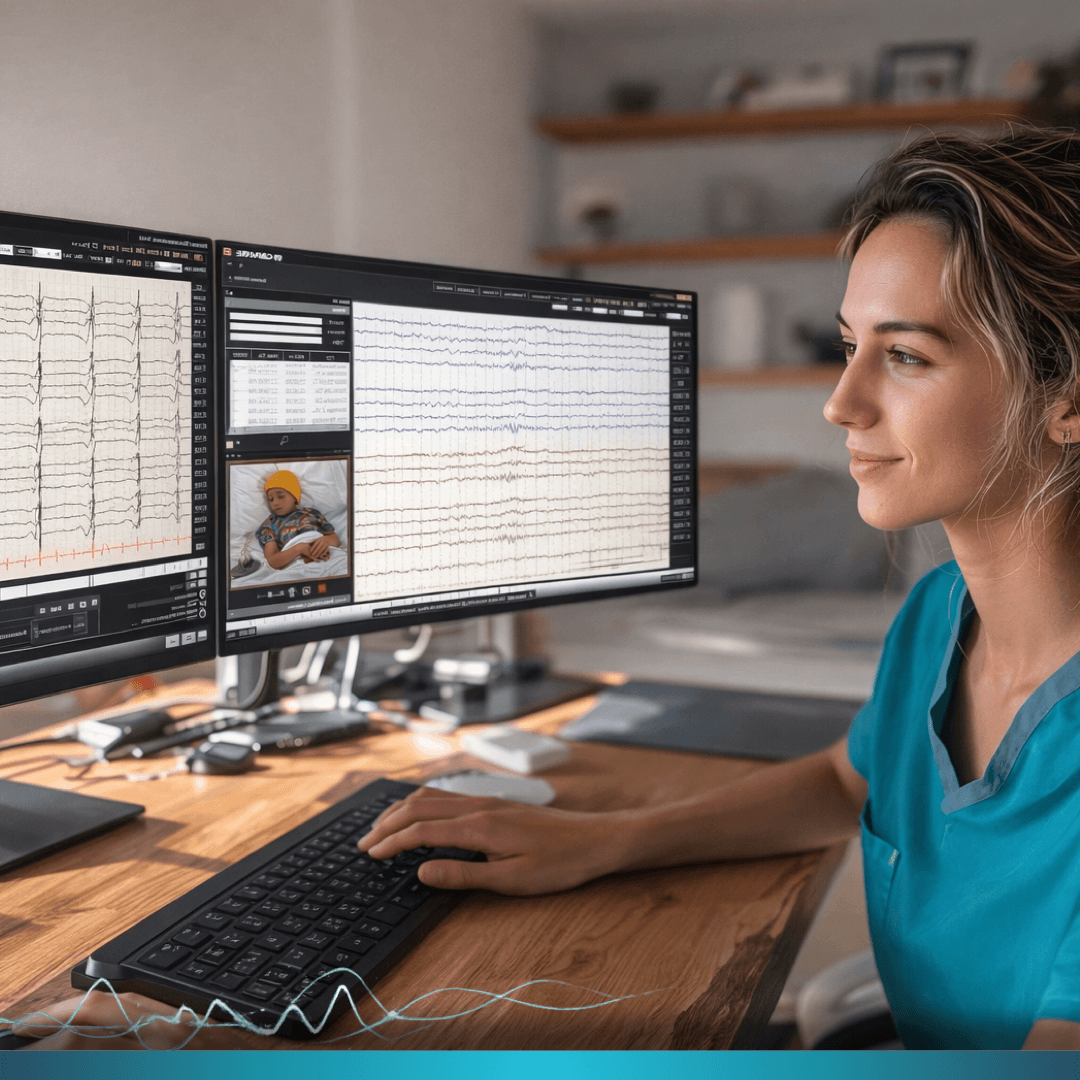
Whether your EEG program is built internally or augmented externally today, the Virtual EEG Department provides:
That’s the difference between having EEG coverage and running an EEG department.


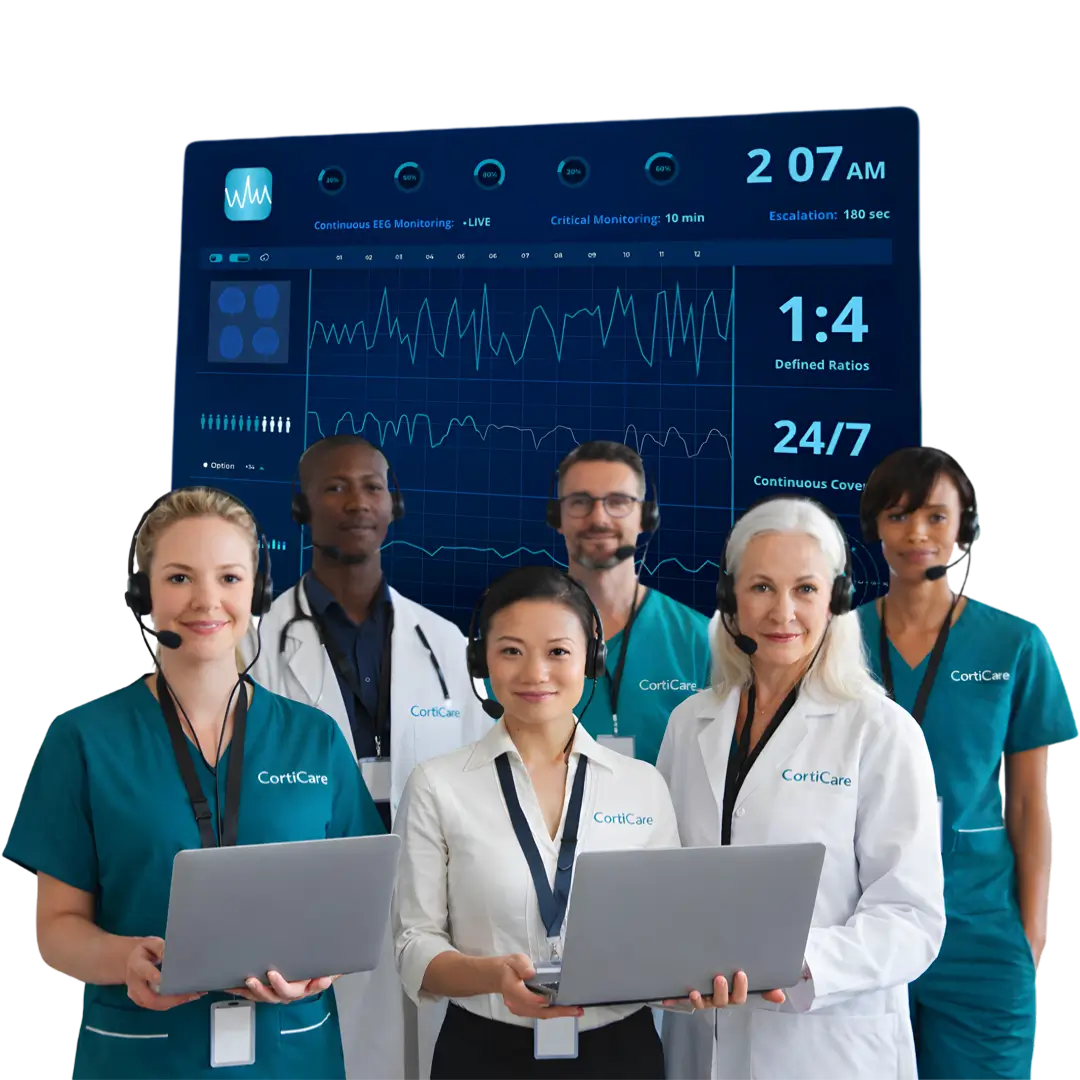
Coverage expectations are documented and consistent.
24/7 means defined ratios, defined response pathways, and defined accountability—not just availability.
High-risk patients receive continuous surveillance support.
Designed to augment—not replace—local teams, who remain responsible for bedside clinical decisions.
Escalation is structured, predictable, and timely.
Concerning EEG activity triggers action based on standards—not individual availability.

Coverage is visible and reviewable.
Leaders can articulate who is covered, when, and how escalation occurs—across the system.
Built to support growing programs.
The Virtual EEG Department scales with your system, not just with local staffing.

You don’t need to replace your department to improve coverage. We evaluate how coverage currently functions across shifts & sites, and identify where defined standards and escalation pathways can improve consistency, scalability, & patient protection.